Why PhD Students Procrastinate and What We Can Do About It

Post as appears on http://ahscribbles.com/phd-procrastinate/
PhD students are notoriously famous for procrastinating. To understand why, let’s take a look at an equation Nick Winter presented in his book The Motivation Hacker, as I’ve written about here;

The biggest problems PhD students face are impulsiveness and delay. Most of the time, these two go hand-in-hand. Graduation dates (or thesis deadlines) are so far off into the horizon {delay} that this one hour spent going down the IYS (Infinite Youtube Spiral) {impulsiveness} seems insignificant. Since both impulsiveness and delay are high for PhD students, Motivation levels tend to dip, and so we procrastinate….
a lot…
by watching videos on procrastination like Tim Urban’s famous TED talk.
Recently, I’ve had to fight procrastination because it was a luxury I couldn’t afford between finishing my thesis and other writing-related side projects. So here are a few tips that worked for me, which I hope works for you;
- Fill your plate and take on more responsibility. I asked one of my friends who’s a working mother how she managed it all; job, home and having a social life. She said, she had to because she couldn’t afford not to. At first the statement was cryptic. I only understood what she meant when I started to get serious about my writing-related side projects (blog/book) in addition to my thesis…all of a sudden, I became more efficient. The attitude became, ‘Do it now or it’ll never get done.’
It seems quite counter-intuitive to add more responsibility when you’re busy, but try it out for some time and see if it helps you be more efficient. When an opportunity presents itself, don’t say no because you don’t have time for it (unless you really, really, really don’t have time for it), but if there’s some time that gets funnelled into facebook and the IYS (the infinite youtube spiral), then say, ‘Yes,’ and learn to adapt.
- Use external motivators. For me, that was beeminder and I wrote about it here. The idea behind beeminder is that it provides short-term pain for slipping on a long-term goal by taking away money from your credit card until you reach the pledge cap(basically, varying the Delay parameter on your Procrastination equation). I was skeptical about beeminder until I tried it and it worked for me. So I’ve been using it to stay on track for big projects — though my pledge cap is low, to be honest — but I’m happy to report the website is yet to take anything from me. Because my thesis was supposed to be a 150–200 page manuscript, I started beeminder.com around 4 months before the first draft’s deadline. This transformed me from the amateur that I was to the professional that I am. I had to consistently add to my manuscript 5 days a week for 4 months straight.
- Know your process. I can’t emphasize this enough. Whether you’re a lab scientist or a writer or a knowledge worker or a student…study your process with the enthusiasm of a microbiologist eyeing bacteria under the microscope. Know all the tiny details of your process, and questions to aid you are;
- Make a time-log for how long certain activities take. It usually takes 2–4 weeks of logging to understand your habits, but after that, you’ll be able to fine-tune your daily plans.
2. Know the conditions under which you enter a state of flow. State of flow is a state of hyperfocus while working on an activity. Some things about it from the work of Mihaly Csikszentmihaly, author of Flow;
- It’s an inner state of intense focus
- It leads to a sense of clarity where you know exactly what you want to do from one moment to the other.
- You know that what you need to do is possible to do, even though difficult
- Sense of time disappears and you forget yourself. to give you an example, let me tell you something that happened while writing this exact section of this exact post; I was in such a state of flow, I ended up dropping my coffee because I wasn’t paying attention and ended up placing it at the corner of the table, where it plunged to the floor.
So know the conditions under which you enter a state of flow; Do you prefer silence or white noise? Can you work on your bed or do you need to be seated at your desk? Can you work in a coffee shop? Are you always distracted by your colleagues in the office? Do you have to get headphones to stop them from disturbing you?
3. Know how much time do you spend on shallow work and how much time you spend on deep work? If you want to distinguish between the two, Cal Newport gives a clear distinction between the two in his book Deep Work;
Shallow work: noncognitively demanding, logistical-style tasks, often performed while distracted. These efforts tend to not create much new value in the world and are easy to replicate.
Deep Work: Professional activities performed in a state of distraction-free concentration that push your cognitive capabilities to their limit. These efforts create new value, improve your skill, and are hard to replicate.
In the context of office work, forwarding emails would fall under shallow work while deep work would probably be something creative like putting together a presentation for a client.
Once you know how much time gets wasted in shallow work, you can adjust your routine so you spend more time on Deep Work and less on shallow work. For instance, my phone is perpetually on silent mode, and I remove the notification from everything. Even work-related emails don’t come to me automatically. I have to fetch them, and I keep Outlook closed for most of the day.
- Visual reminders. One trick I learnt to keep on top of my to-do list is to screenshot it and keep it as the lock screen wallpaper on my phone. That way the to-do list is always on my face. I usually update it every 3–5 days so sometimes I’ll have an item that was on that I had already done.
Even though I’ve mainly discussed my tricks for beating procrastination, I have to admit the most important thing when it comes to beating procrastination is actually the numerator;
Expectancy x Value
But I’ll talk about in another post. Love this post and know someone who is suffering from procrastination? Share this post with them.
If you like this post, support the work by pressing on the green heart below and sharing it with your friends.
Check out my fiction short story collection, “All Bleeding Stops and Other Short Stories from the Kenyan Coast” and visit my website http://ahscribbles.com/ to subscribe to the newsletter.
Make a Resolution Not to Make a Resolution This Time

So my salonist was telling me about how they’re not allowed to take a holiday in Dec because it’s their peak time of the year. Apparently, some of their customers believe that cutting your hair before the new year is a way of leaving your troubles behind (because naturally, your troubles happen to reside in your hair).
But we’re approaching that time of the year when people will go to sleep on Dec. 31 and wake up as totally new people on January 1, resolving to eat healthy, lose weight, wake up early, drink kale smoothies, lift weights, go running, change the world…
Until January 12, that is.
I’m not a big fan of the virtual switch that people pretend to turn on at the beginning of every year, simply because I think it gives people yet another excuse not to start on a Personal Development program (oh, it didn’t work out this year…maybe next year).
If you think about it, setting up New Year’s Resolutions are one of the most effective procrastination techniques ever invented.
So if you want to join the anti-NYR group, here a few other things you might want to try;
– Do a 30 day challenge (statistically speaking you’re more likely to finish a 30 day challenge than a 365 day one). Matt Cutts made those famous in his TED talk.
– List a 100 things you’re grateful for. Basically, put your Attitude of Gratitude on steroids.
– Audit your life, don’t overhaul it. Most people try to do so much so fast and fail miserably. So instead of all that, just take a 30,000 ft view of your life and see which areas would need improvements, and which ones seem to be okay.
– Get to know your future self. One of the biggest weaknesses of resolutions is that it’s a promise your today self makes to your future self. “I resolve to lose 50 lbs by next year make yourself.” But the thing with promises — and I’ve written this over and over again — is that they’re hard to keep because the mentality with which the promise is made is usually different from the mentality with which it has to be kept. That’s why, instead of promising your future self something, get to know them. How do you want them to feel? How do you want them to look like? What do you want them to have?
Once you’re clear on how your future self is, start taking actions. Small, consistent, action.
And that my friends, are the first steps to being great without the whole resolve-shame-disappointment cycle that plagues people every year.
What are your opinions on this? I’d like to hear from you on twitter @ahechoes #antiNYR
If you like this post, subscribe to the newsletter and like the facebook page; https://www.facebook.com/AH-Scribbles-1699410536954329/
Also, check out my short story collection, “All Bleeding Stops and Other Short Stories from the Kenyan Coast,” and the book summarizing a lot of ideas in the personal development field if you want to change your life but don’t know where to start, Mine Your Inner Resources.
On Snapchat and the Ephemeral

 I feel there are two types of people; those who understand snapchat and those who don’t. Before I start, let me admit that I fall under the latter category. I don’t understand what is it about the app that has captured the attention of so many young people. It also makes me wonder what affect it could have on people, especially the young.Would they translate their love for the ephemeral to real life? Does that mean that their fashion, friendships, and marriages would have a 24-hour expiry date? What would history mean to them? Would it encourage stalkers?
Or maybe this fascination with the ephemeral could be a good thing. They might refuse to be shackled by the cultural story their parents brainwashed them with. They might be able to bounce up quickly after every fall because that rejection was “soooo yesterday. They might get engaged into every moment of their life without being encumbered by pains from the past.
Or maybe, I’m overthinking all of this? What do you think about snapchat? Do you use it? Tweet me @ahechoes.
If you like this post, support the work by sharing it with your friends on facebook, like the facebook page; https://www.facebook.com/AH-Scribbles-1699410536954329/
Also, check out my short story collection, “All Bleeding Stops and Other Short Stories from the Kenyan Coast,” and the book summarizing a lot of ideas in the personal development field if you want to change your life but don’t know where to start, “Mine your inner resources”.
Don’t Let Your Self-Worth Be a Function of This
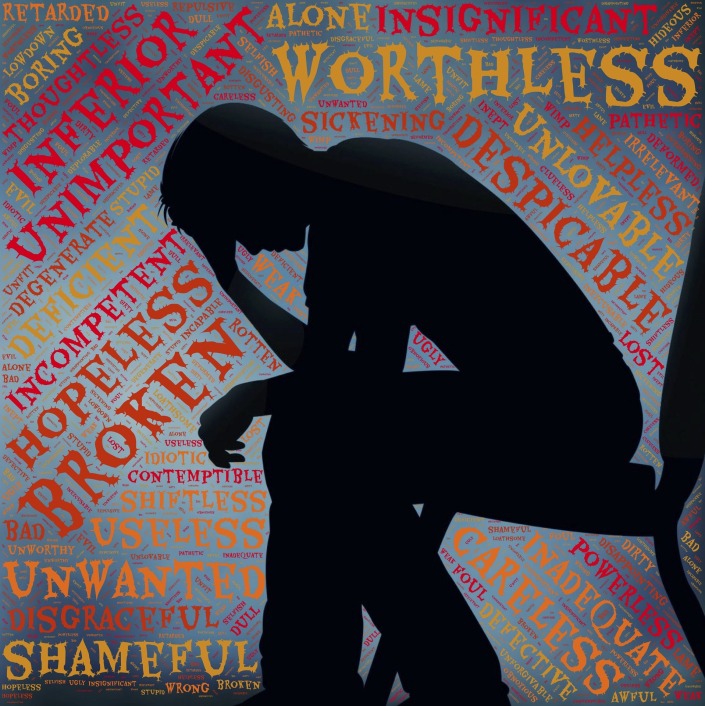 It’s quite interesting how we’ve bought into the idea that our self-worth is a function of something outside of ourselves; be it our jobs, or spouses or college degrees or all of the above.
The sad thing happens if we ever lose that one thing, we feel like we’re nothing. We don’t know where to start, and we turn into that headless chicken that first inspired the phrase. That’s why the first thing to do is to have multiple identities so if one of your identities isn’t working out for you, then another one takes over. Let’s say your job is the only thing your life revolves around, losing it becomes disastrous. Whereas if there are other identities and roles you play – maybe you’re a good son/daughter, or you volunteer in your community or you have a good social support – the blow from losing that job lessens.
The second thing to do is to make sure our self-worth is a function of internal strengths, and I’ve personally come to learn this the hard way. I come from a small tight-knit town and one thing we have that I haven’t experienced in other places is the very strong influence society has on people’s personal choices. It’s like a magnet that keeps the iron filings — or people — in line.
If you’re one of us, chances are, the phrase “What will people say?” always plays somewhere at the back of your mind, and it’s difficult to break the habit even if you’re trying to break away.
So you walk around defining your self-worth as a function of society-approved thing; for men it’s a corporate job, and for women it’s a husband and kids. So if nothing about your life has society’s seal of approval, you’ll probably hear your fair share of talk about being abnormal, inadequate, and unworthy. The nice people say it in front of your face, and the not-so-nice ones say it behind your back.
And everyday you’re going to have to remind yourself of your worthiness, not because you have something, but because you are. It doesn’t matter what job you’re holding or whether or not you have a ring around your finger a kid tagging along by your side. Remind yourself you’re worthy because you are. Remind yourself of your personal values, and take concrete steps to live by them day in day out. Remind yourself to treat people with respect, and to add value to the lives of those around you. Remind yourself to engage fully with the world, to feel the sand tickling your feet, to watch the silver supermoon melt into dark, choppy waters, to close your eyes and feel the wind against your face, because life is beautiful and you get to be here…
Most importantly, remind yourself it’s a battle you’ll keep on fighting every single day…
simply because you are.
If you liked this post, share it with your friends, subscribe to the mailing list here; [mc4wp_form id=”680″], and like the FB page
Also, check out my short story collection, “All Bleeding Stops and Other Short Stories from the Kenyan Coast,” and the non-fiction book summarizing a lot of ideas in the personal development field if you want to change your life but don’t know where to start, “Mine your inner resources”.
 A Heart's Echoes